Showing posts with label Classroom Framework. Show all posts

Classroom Framework


With the new Classroom Framework and our schoolwide behavior goal, we want to make sure that we are providing you with support. Starting next week, the leadership team will be doing collaborative observations—all of us observing teachers together. The purpose of the observations is to provide consistency with our expectations and further our development as leaders.

We will try to notify you in advance if the entire leadership team is coming into your classroom, but it may not always be possible.

We will be observing the Classroom Culture competency from the Framework until September 19.  

Please review the new framework in this document to provide you with some insight on what we are looking for when we observe you in action. Don’t hesitate to reach out if you have any questions regarding the expectations.

EOY Evaluations

All EOY evaluations will be finalized by the end of today. With evaluations being in Oracle, it doesn’t provide an option for evaluations to be emailed. You can view and/or print your evaluation by following the directions below.

View Print Eval Instructions PDF by embryjd on Scribd

FLO #1


Full Lesson Observations (FLO) begin November 15! These observations are announced (scheduled) and are 30-45 minutes. Deans will be inputting ratings for all four competencies: Classroom Culture, Planning, Teaching, and Assessing (see below). The ratings from these observations will go into your Interactive Framework. Your dean will have a sign-up available soon and more information in their newsletters.

CF With Look Fors by embryjd on Scribd

EOY Evaluations


The End of the Year Evaluation window is now open. You and your dean have already scheduled your O3 for the week of April 20-May 1 to discuss and finalize your ratings. Due to the school closure, NHA has made some changes to the evaluation. The Positive Impact on Student Learning indicator will be removed from the evaluation since students didn’t have a full year to demonstrate growth. Instead, Professional Accountabilities will account for 50% of the overall evaluation score, and the remaining 50% will be based on the Classroom Framework. I will be sending a separate email explaining the self-rating process for Professional Accountabilities.

Classroom Culture Observations


This week, the admin team started doing collaborative observations; all of us observing teachers together. The purpose of the observations is to provide consistency with our expectations and further our development as leaders. Please know that we will try to notify you in advance if the entire admin team is coming into your classroom, but it may not always be possible.

For the remainder of September, we will be observing the Classroom Culture competency from the Framework. Please do not hesitate to reach out to the deans or me if you have any questions about the expectations.

Classroom Culture


We want everyone to continue to focus on classroom culture this week. A key factor in having a great classroom culture is making sure you have solid routines and procedures. Transitions in teaching are important because student learning depends upon them. Efficient transitions increase instructional time and decrease challenging behaviors. Transitions that are executed smoothly can be fun, efficient, orderly, and time saving; but, they must be modeled and practiced continually. Make transitions fun by creating a friendly competition. Time students to see if they can do it under a specific time limit and continue to challenge them to beat their personal best.


The stoplight timer pictured above adds a nice visual cue. However, the timer on your phone works great, too, especially if your students get to choose the alert sound!

Classroom Culture


Keeping our Classroom Framework in mind, we want everyone to focus on building positive relationships with students and establishing classroom routines/procedures during the first few weeks of school. 

One way to build positive relationships with your students is to greet your students. We expect all teachers to greet their students at the door every morning starting at 7:50 AM! This will assist with safety by monitoring our students and adult visitors in the hallways. But most importantly, it helps you to gauge your students’ moods so you can be proactive instead of reactive.  

Please position yourself in a way that you can still see inside your classroom and have a Do Now posted to avoid unwanted behaviors from occurring within the classroom.

See this teacher’s creative greeting.

EOY Activities

I saw some creative ways to end the school year on a positive note from We Are Teachers. They provided 30 different activities, but I’ve copied my favorite six activities in the document below, but please click on the link for all the ideas. My favorite activity was “Let the students become the teachers.” Let me know if you try any!  


Classroom Framework-Planning

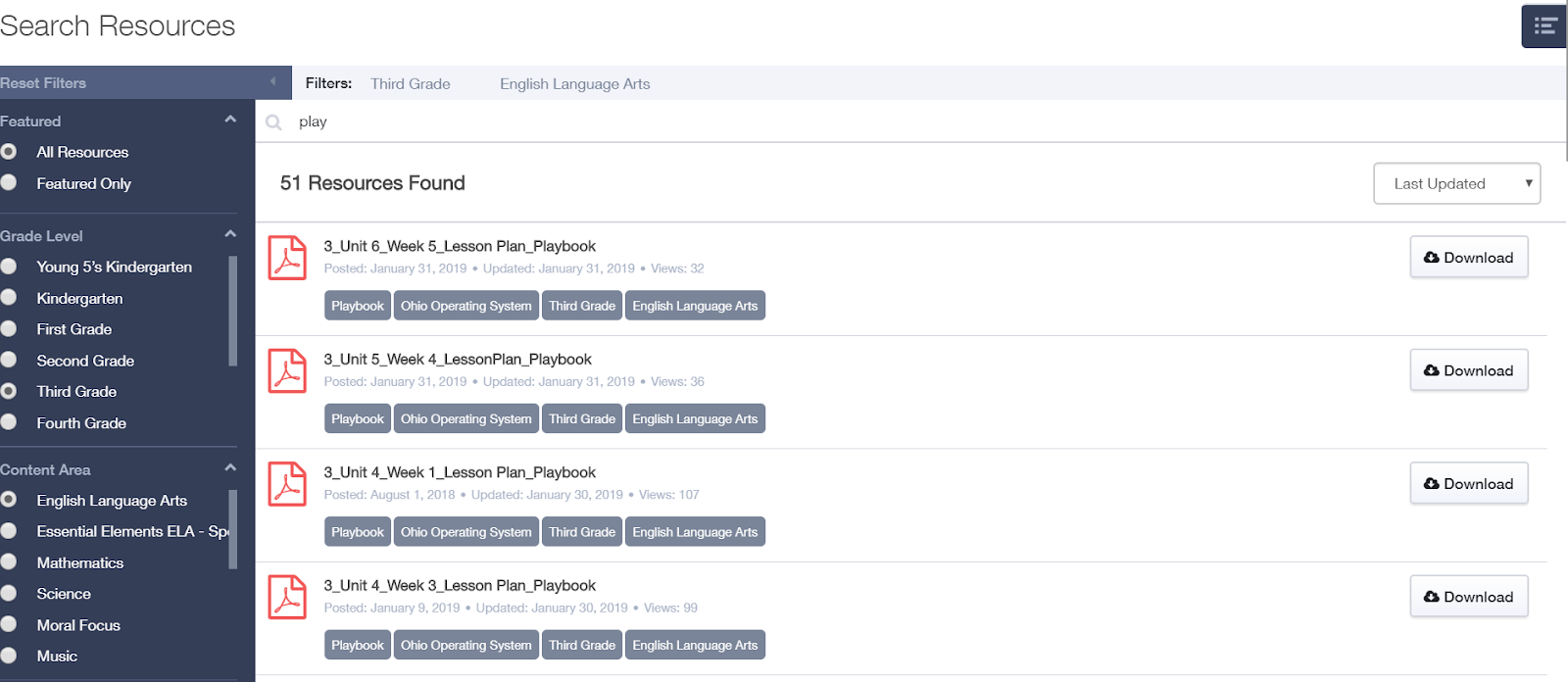
As we continue our discussion around planning, please utilize NHA’s resources on the Curriculum app. These resources will save you lots of time in the planning process. NHA has Playbooks for ELA instruction for all grades.

In addition, they have Playbooks for middle school math, called “Week at a Glance.”

The Playbooks are completed lesson plans that are scripted out and they include writing prompts. I would encourage you to see if you could include some, if not all the components in your lesson plans. This could save you A LOT of time and give you new instruction ideas!


Classroom Framework-Planning

As educators, planning is an important component for quality instruction. At Keystone, teachers are required to submit their lesson plans on a weekly basis in www.planbookedu.com. 

In following along with the expectations identified in the Classroom Framework (Instructional Alignment) and the communication from your deans, please make sure to include the following in your lesson plans for each subject/grade that you teach:
       ·   Common Core Standard
       ·    I Can statement (objective): aligned to the standard
       ·    Materials: including page numbers and worksheet titles
       ·   Activity: detailed description of the activities/lesson including engagement strategies
      ·  Formative assessment (exit ticket): something brief that informs you if students have grasped the objective of the lesson 
    ·  Differentiation: leveled instruction to meet the needs of all students

When designing your lesson plan, keep in mind that anyone should be able to pick them up and teach your lesson with minimal guidance. If you do them well, there won’t be a need for sub plans. :)

Classroom Culture


It's a no-brainer that classrooms should be inviting environments that make students feel good to be there. What does your classroom physical environment say about your classroom culture? When looking at the Classroom Framework, NHA identifies several expectations under the Physical Environment indicator.

Classroom Culture

Teacher leads a self-managing classroom by building positive relationships, maintaining physical space, sustaining classroom routines and procedures, and holding students accountable to behavioral expectations.

Indicators

Ineffective

Developing

Effective

Exemplary

Physical Environment:
Teacher optimizes the physical space of the classroom for student learning by maintaining a clutter free and print-rich environment, providing access to materials, as well as arranging space for movement and collaboration.
A) Teacher does not maintain physical space in a way that optimizes student learning.
B) Teacher maintains a clutter free environment.
C) Teacher purposefully arranges the learning space.
D) Teacher arranges materials for students to access.
E) Teacher arranges the learning space in a way that optimizes movement, collaboration (student-student, teacher-student) and presentation.
F) Teacher creates a print-rich environment that comprises a majority of authentic student or teacher created materials along with real life materials
G) Students utilize materials and furniture arrangement to further their learning.
H) Students self-manage and contribute to maintaining the cleanliness and order of the classroom.


To reach the exemplary level, I’ve created a checklist.
·       Is your classroom void of clutter on your desk, floor, and your walls? When every space on your walls has something on it, it can be overstimulating to some students. Err on the side of more wall space, less posters.
·       Can your students access materials and are they utilizing them? Or are all your assignments paper-pencil?
·       Do you have students’ desks arranged in a way that encourages collaboration? I understand that different types of instruction require different seating arrangements, so there is more than one way to arrange your seats. However, consider that if you have seats in rows, students at the front can't see any of the students in the class. Those in the back mostly just see the heads of their classmates.
·       Is majority of the work around the room created by you and your students? Or from the teacher store and Teachers Pay Teachers? I love walking into classroom where there is a wall dedicated to student work, anchor charts are posted (What, How, Where; Math Stories; Social Contract; etc.), and a moral focus wall is displaying evidence of the lessons you have taught.
·       Do you have a designated space in your classroom to meet with students for small group instruction?
·       Do students contribute to the cleanliness of your room when transitioning from one subject to another?

Thank you for taking to time to reevaluate your learning environment. Importantly, including students in creating the physical environment can enhance that environment, increase the feeling of classroom community, and give students a sense of empowerment.

Classroom Culture


Building positive relationships in a classroom has positive and long-lasting implications for students' academic and social development. A classroom where students demonstrate care and respect for the teacher and one another is critical. So much so, that NHA has building positive relationships as the first indicator under the Classroom Culture competency. 


Classroom Culture

Teacher leads a self-managing classroom by building positive relationships, maintaining physical space, sustaining classroom routines and procedures, and holding students accountable to behavioral expectations.

Indicators

Ineffective

Developing

Effective

Exemplary

Building Positive Relationships:
Teacher builds relationships with and among students based on mutual respect, trust, and appreciation to create a safe environment for all.
A) Teacher does not attempt to build relationships or attempts at building relationships are not successful at relationally engaging students.
B) Teacher develops and teaches expectations for respectful interactions among students.
C) Teacher demonstrates care and respect in interactions with all students.


D) Teacher and student interactions are intentionally planned and are focused on creating personal connections.
E) Students demonstrate care and respect for the teacher and one another.
F) Students collaborate and engage in positive, supportive relationships with one another.


The descriptor under effective states, “Teacher and student interactions are intentionally planned and are focused on creating personal connections.” It’s important to focus on the phrases intentionally plan and personal connections. How do you intentionally plan to get to know your students daily? NHA recommends Good News. Most of you are familiar with Good News, but if you’re not or need a refresher, click on the link Good News OnCourse Video. 

Good News is not the only way to intentionally plan personal connections with your students. Some people use restorative circles with a question of the day. You can pose a question to your class and pass an object around until everyone has answered the question. Another idea is called “whiteboard questions” where you write a question on the whiteboard and students can write his or her answer on the board or a post-it. You could call on students and have them verbally share or you could record their responses. 


Student Behavior Resources


As a continuous effort, to support you with level 2 behaviors, we want to give you another resource to use. Do you struggle trying to find an appropriate consequence for students? Well, NHA provides a Positive Behavior Replacement Plan. 

This is 30 mini-course packets designed as a resource for teachers to use as a consequence. The packets are intended to help students understand the consequences of their challenging behaviors; why they are not acceptable; and what they can do to change. You can access the packets by going to MyNHA and clicking on “Behavior Site” app.


You can also use these packets for your entire class. For instance, you could use Cooperation W1, as a guide for speaking to your class if you know there will be a substitute the following week.

Please see the chart below for a list of packet topics per wing. 

Wing 1

(Grades K-2)

Wing 2

(Grades 3-5)

Wing 3

(Grades 6-8)

Fighting
Pushing
Cooperating
Running
Wasting Time
Out of Seat
Not Prepared
Inappropriate Talking
Throwing Things
Name Calling
Fighting
Disobeying
Talking Back
Disturbing Class
Bothering Others
Staying in Seat
Inappropriate Talking
Swearing
Disrespect
Stealing
Fighting
Insubordination
Profanity and Obscenity
Disrespectful Behavior
Classroom Disturbance
Unprepared for Class
Late to Class
Bullying
Skipping Detention
Skipping Class


Lastly, there is a teacher’s guide for follow up. Please see me, Jen H. or any of the deans if you need assistance utilizing the resources.  


Classroom Framework


This week we focused on Classroom Culture through admin observations and staff meeting discussion. The admin team saw great things during our collaborative observations. In addition, during our staff meeting we talked about the differences between level 2 and 3 behaviors. During that conversation, we stated:
·    Teachers were responsible for level 2 and 3 behaviors (investigating, entering, and determining and upholding appropriate consequences).
·    All level 2 behaviors need to be entered into MyNHA and an email sent to parents.
·       Level 3 behaviors require a parent phone call

Although, teachers are responsible for level 2 and 3 behaviors, please do not hesitate to reach out to a member of the admin team (deans, Jen H. or myself) for assistance. We can brainstorm strategies; cover you class so you can speak to the student and/or parent; co-teach with you; do behavior observations, etc. You are responsible, but you are NOT alone!

If you do have a student who consistently demonstrates level 2 behaviors, it’s important to analyze the behavior to determine the motivation using the Behavior Motivation Analysis. The BMA should be utilized with any student who has behavioral needs that have not effectively been addressed using typical classroom management strategies. Is the motivation behind the behavior: attention seeking, revenge, power, or fear of failure? This is a tool that helps teachers to proactively address student’s disengagement by reflecting on the behaviors to determine what the student is attempting to communicate to the teacher, such as:
·        The possible motivation(s) for the behaviors
·        Patterns of behaviors
·        Antecedents to the behaviors
·        Consequences used and the effectiveness of these consequences
Through this process you may learn new information about the student including:
·        Home life and family structure/situation
·        Fears, concerns, worries, insecurities
·        Triggers
·        Preferred calming and settling strategies
·        Effectiveness of previously enforced consequences

·        Possible reasons for the (in)effectiveness of these strategies  

Attached I’ve included the BMA form, prevention and intervention strategies for each motivator below to assist you with the process. I have a more in-depth prevention and intervention sheets for those who want to do this. The prevention and intervention documents below provide just an overview. Again, don’t hesitate to reach out to a member of the admin team for support. 

BMA-5 pages by on Scribd